Giant Microbes
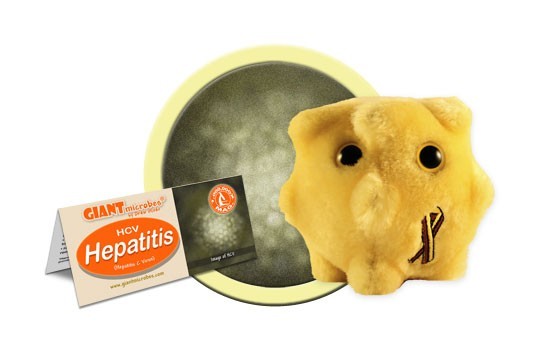
Hepatitis Plush
Item Number: GMUS-PD-0380
$14.99
Giant Microbes Hepatitis (Hepatitis Virus) plush
- HAV is spread primarily by unsanitary food and water
- HBV is transmitted in bodily fluids and can cause chronic liver disease
- HCV is perhaps the most dangerous: no vaccine is available
- HDV occurs only in the presence of HBV
- HEV is relatively mild and non-chronic
- HFV and HGV are newly identified; their connection with liver disease is debated
All About Hepatitis (Hepatitis Virus)
- HAV* is transmitted primarily by unsanitary food and water (frequently found in developing countries), or by direct contact with an infected person. It is non-chronic and relatively mild, though symptoms can include jaundice, fatigue, nausea, and fever. Vaccines are available.
- HBV is transmitted by bodily-fluids and is far more serious. Chronic liver disease caused by HBV results in death in 15-25% of chronically infected persons. Vaccines are available and are highly recommended.
- HCV is perhaps the most dangerous of the hepatitis viruses. Like HBV, it is transmitted by bodily-fluids. It causes severe liver damage in 70% of chronically infected persons; there is no vaccine available; and 80% of infected persons have no symptoms or signs of the disease - so not only are they at risk, but they can pass it to others unknowingly. Those at particular risk and for whom testing is advised include:
- I.V. drug users - most infections are due to illegal injection drug use
- Blood transfusion recipients before 1992 (prior to donor screening)
- People with undiagnosed liver problems
- Infants born to infected mothers
- HDV is similar to HBV, and only occurs in its presence, so vaccination-protection for HDV is, for practical purposes, available.
- HEV is relatively mild and non-chronic; it produces symptoms similar to HAV and is transmitted similarly. However, no vaccine is available.
- HFV and HGV are newly identified; their connection with liver disease remains controversial.
*Hepatitis viruses are typically identified by letters, e.g. HAV for Hepatitis A Virus. Virus information is provided by the Center for Disease Control.
CURE It can be treated and sometimes successfully cured with antiviral medications.
HISTORY 1989: Scientists at CDC and NIH discovered Hepatitis C.
Big Outbreaks:
2002: 99 cancer patients in Nebraska got infected from unsanitary practices.
2008: 50,000 people exposed and >100 infected with Hepatitis C at a Las Vegas hospital.
Recent Outbreaks:
2015: There have been growing rates of Hepatitis C and HIV in Indiana over the past 3 years, mostly due to injection drugs.
FASCINATING FACTS - This is one of the main causes of liver transplants.
- Over 3 million people in the United States have this disease.
UPC:
Recently Viewed Items









Share: